Moving a heavy massage chair without damaging your floors requires careful planning, the right tools, and proper techniques. These chairs typically weigh 150 to 300 pounds and contain delicate electronics, making them challenging to relocate. By using furniture sliders, moving blankets, and enlisting at least one helper, you can successfully move your massage chair to its new spot while protecting your home’s flooring.
Understanding the Challenges of Moving a Massage Chair
Moving a massage chair is more complex than shifting an ordinary armchair due to its substantial weight and intricate design. These chairs often weigh between 150 to 300 pounds, making them difficult to lift or maneuver alone. 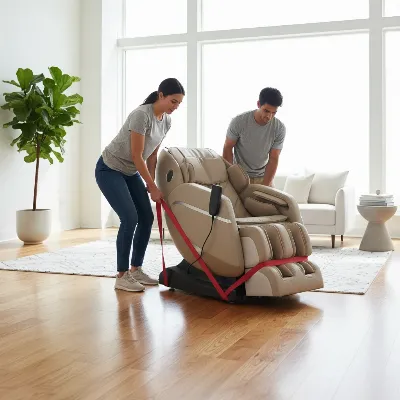 Heavy massage chair being moved by two people using moving straps, focusing on careful technique.
Beyond their mass, massage chairs are bulky and have awkward dimensions, complicating navigation through narrow spaces. Their internal structure houses sensitive motors, rollers, air cells, and wiring, all susceptible to damage from impacts or improper handling. The exterior upholstery and finishes can also be easily scuffed or scratched if not adequately protected. Without proper precautions, there is a significant risk of injury, chair damage, or harm to floors and walls.
Essential Preparations Before Moving Your Massage Chair
Thorough preparation is crucial for a successful and damage-free massage chair relocation. Rushing the process can lead to avoidable accidents, so plan every step meticulously.
First, measure your path accurately. Measure the chair’s dimensions (height, width, depth) and compare them to doorways, hallways, and any other tight spaces, including the new location’s entry. Pay special attention to diagonal measurements for tricky angles. Next, clear the route entirely. Remove obstacles, loose rugs, small furniture, or decorative items that could impede your path or cause a tripping hazard. If moving over carpet, ensure it’s free of wrinkles; on hard floors, sweep away any small debris that could scratch the surface when the chair slides.
Gathering your tools is crucial for both safety and floor protection. You’ll need:
- Furniture sliders: Indispensable for preventing scratches. Use rigid plastic sliders for carpet and felt-padded sliders for hard floors. For chairs with a flat base, a large moving blanket or thick quilt can serve a similar purpose.
- Moving blankets or heavy quilts: Provide cushioning for the chair, protect walls, and can act as floor protection for larger areas or legless chairs.
- Lifting straps: Make lifting heavy objects easier and safer by distributing weight and leveraging stronger muscle groups.
- Dolly or hand truck: Useful for longer distances or partially disassembled chairs, but ensure it has soft, non-marring wheels.
- Basic toolkit: Screwdrivers, Allen wrenches, or specific tools mentioned in your chair’s manual for disassembly.
- Labeled bags: For screws, bolts, and small parts removed during disassembly.
- Plastic wrap or stretch film: To secure any loose components and protect upholstery.
Most importantly, enlist help. Moving a heavy massage chair is rarely a one-person job. Recruit at least one, preferably two, strong and capable helpers. Clear communication and coordinated effort are vital to avoid injuries and damage.
Step-by-Step Guide to Moving Your Massage Chair Safely
Once preparations are complete, you can begin the physical process of moving your massage chair. Approach each step systematically to ensure a smooth transition.
Disassemble and Prepare the Chair
|
Our Picks for the Best Massage Chair in 2026
As an Amazon Associate I earn from qualifying purchases.
|
||
| Num | Product | Action |
|---|---|---|
| 1 | Snailax Shiatsu Back Massager with Heat Massage Chair Pad Kneading Back Massager for Pain Relief Deep Tissue Chair Massage Pad for Office Home |

|
| 2 | belhope Shiatsu Neck and Back Massager with Heat, 4D Kneading Back Massager for Pain Relief Deep Tissue, Comfortable Back Massage for Chair, Massage Mat for Home, Mother's Day Gifts for Men Women |
|
| 3 | Snailax Neck Back Massager with Heat, Full Body Massage Chair Pad, Adjustable Compression, Rolling, Shiatsu Massage Seat Cushion, Chair Massagers,Gifts for Women, Man (Upgrade) |
|
| 4 | Snailax shiatsu Neck & Back Massager with Heat, Full Back Kneading Shiatsu or Rolling Massage, Massage Chair pad with Height Adjustment, Back Massager for Neck and Shoulder |
|
| 5 | Snailax Shiatsu Neck Back Massager with Heat, Massage Chair Pad with Compression, Height-Adjustable Neck Massage Rollers Chair Seat Massager, Gifts for Men, Women |
|
| 6 | Lvrunben Shiatsu Back Massager with Heat, 3D Kneading Massage Chair Pad, Electric Massage Seat Cushion for Body, Neck,Shoulder, with Movable Multi-Function Leg and Foot Massager, for 62-69 inches |
|
| 7 | COMFIER Massager Chair with Heat, Shiatsu Neck Back Massager Portable with Compression & Rolling,Massage Chair Pad for Neck & Back for Muscle Tension Relief |
|
| 8 | Mynt FSA Eligible HSA Approved Shiatsu Neck and Back Massager for Chair with 10 Deep Kneading Nodes, 2D & 3D Back Massage with Heat, Portable Spot Massage Chair Pad (Black) |
|
| 9 | COMFIER Shiatsu Back Massager with Heat, Dual Motor 3D Rollers, Long Track Deep Tissue Kneading, Foldable Massage Chair Pad with Adjustable Height for Back Tension & Muscle Stiffness |
|
| 10 | COMFIER Shiatsu Neck & Back Massager with Heat, Full Back Coverage Massage Chair Pad with 4D Kneading & Adjustable Neck Nodes, Waist & Hip Compression |
|
Start by disconnecting the power cord from the wall outlet and securing it neatly to prevent it from snagging or getting damaged. If your chair has an air hose for footrests or other components, disconnect and secure those as well. Refer to your owner’s manual for specific instructions, as models vary.
Next, remove any detachable parts. This often includes headrests, lumbar pillows, footrests, or leg rests. Some models also allow for the removal of armrests or even the backrest, significantly reducing the chair’s bulk and weight. Store all removed parts, along with any screws or connectors, in clearly labeled bags. This prevents loss and simplifies reassembly. Before moving, secure any remaining moving parts, such as recline mechanisms or rollers, with tape or plastic wrap to prevent them from shifting or extending unexpectedly.
Protecting Your Floors During the Move
Protecting your floors is paramount when relocating such a heavy item. The right tools and techniques will ensure your surfaces remain pristine.
Utilizing furniture sliders is the most effective way to prevent scratches and gouges. For chairs with distinct legs, carefully tilt one side of the chair slightly and have a helper slide a felt-padded slider under each leg on that side. Repeat for the other side. For chairs with a flat base or without discernible legs, a large, thick moving blanket or a folded quilt can be placed directly under the chair. Once the sliders or blanket are in place, the chair can be gently pushed or pulled across the floor.
For longer distances, or to protect a wide path, you can create a protected pathway using additional moving blankets, sheets of cardboard, or even flattened cardboard boxes. Lay these down sequentially along the entire route, especially over sensitive flooring like hardwood, laminate, or delicate tiles. As you slide the chair, simply move the blankets or cardboard from behind the chair to the front, creating a continuous cushioned path.
Maneuvering the Chair
Many modern massage chairs are designed with built-in rear wheels for easier movement. To engage these, stand behind the chair with a helper at the front. Both of you should grasp sturdy parts of the chair’s frame (avoid delicate upholstery or moving parts). Gently tilt the chair backward until it rests securely on its rear wheels. Your helper can then guide the front while you pull from behind, rolling it to its new location.
For sections where lifting is unavoidable, such as over thresholds or uneven surfaces, employ proper lifting techniques with assistance. Always bend at your knees, not your back, and lift with your legs. Coordinate with your helper, communicating clearly (“On the count of three… one, two, three, lift!”). Lift simultaneously and move slowly to maintain balance.
When navigating doorways and tight spaces, precise coordination is essential. If the chair is too wide, you may need to pivot it through the doorway at an angle. If height is an issue, reclining the chair or removing the backrest (if possible) might create enough clearance. Take your time, and don’t force the chair, as this is where wall and doorframe damage often occurs.
Moving up or down stairs is the most challenging and highest-risk part of relocating a massage chair. If possible, disassemble the chair further, removing any component that adds weight or bulk. Lifting straps are highly recommended for stair moves, as they allow for better grip and weight distribution. One person should always be on the lower side of the chair, guiding it down or supporting it from below, while the other person is on the upper side, providing stability and leverage. For safety, ensure clear communication, take frequent breaks, and never attempt this with fewer than two strong individuals. For multi-story moves, or exceptionally heavy chairs, professional movers are often the safest and most prudent option.
Top Tips for Preventing Floor Damage
Preventing floor damage during a massage chair move boils down to vigilance and the smart use of protective tools.
- Always use sliders or blankets: Never slide a heavy massage chair directly on any type of flooring, even carpet, without appropriate protection underneath its contact points.
- Avoid dragging or pushing directly on floors: Even small debris trapped under a chair can cause deep scratches. The purpose of sliders and blankets is to create a smooth, protective layer.
- Lift, don’t slide, over transitions: When moving from a carpeted area to hard flooring, or over a raised threshold, always lift the chair to prevent the sliders from snagging or damaging the edge of the floor material.
- Inspect your path for debris: Before starting, thoroughly sweep or vacuum the entire route. Even a tiny pebble can cause a significant scratch when trapped under a heavy object.
- Test sliders in an inconspicuous area: If you’re unsure how a particular type of slider will interact with your flooring, test it in a hidden spot first to ensure it doesn’t leave marks or cause friction.
- Consider a temporary floor covering: For particularly sensitive or brand-new floors, laying down temporary hardboard sheets or heavy-duty cardboard runners can offer an extra layer of protection beyond sliders and blankets.
When to Call in the Professionals
While a DIY approach can save money, there are clear instances when hiring professional movers, especially those experienced with specialty items, is the wisest choice. Consider professional help if:
- Your chair is exceptionally heavy or bulky: Some high-end models can exceed 300 pounds and are extremely difficult to maneuver.
- The move involves complex disassembly or reassembly: If your chair’s manual indicates a complicated process, or you’re uncomfortable with electronics, pros can handle it.
- You need to move the chair up or down multiple flights of stairs: This is a high-risk scenario for injury and damage, even with helpers.
- You are undertaking a long-distance relocation: Professionals have the right equipment and insurance for transport.
- You lack sufficient capable help: Never compromise on safety by attempting to move it with inadequate assistance.
- You want peace of mind: White-glove moving services take on all the responsibility, ensuring your chair and home are protected.
“Moving a massage chair is an exercise in planning. The biggest mistake people make is underestimating its weight and complexity. Always over-prepare, and when in doubt, call a professional.” – Sarah Chen, Logistics Expert, Premier Moving Solutions.
Conclusion
Moving a heavy massage chair requires careful planning, the right tools, and a commitment to safety. By meticulously preparing your path, wisely disassembling components, and utilizing protective measures like furniture sliders and moving blankets, you can effectively safeguard your floors from scratches and dents. Enlisting help is non-negotiable, ensuring both your well-being and the integrity of your cherished relaxation device. While it can be a challenging task, a well-executed move ensures your massage chair continues to provide comfort in its new location, leaving your floors as flawless as they were before. What’s your biggest concern when facing the relocation of heavy furniture in your home?
Frequently Asked Questions
Can I move a massage chair by myself?
Attempting to move a heavy massage chair alone is strongly discouraged. These chairs typically weigh between 150 to 300 pounds and have complex internal mechanisms. Moving it solo significantly increases the risk of personal injury, damage to the chair, and extensive harm to your floors and walls. Always enlist the help of at least one, and preferably two, strong individuals.
What if my massage chair doesn’t have wheels?
Many massage chairs have built-in rear wheels for easy tilting and rolling. If your model lacks wheels or they are not easily accessible, you can still move it using furniture sliders. Place felt-padded sliders under each leg or, for a flat-based chair, use a large, thick moving blanket underneath to facilitate sliding across the floor without damage.
How do I protect hardwood floors specifically when moving a massage chair?
To protect hardwood floors, use felt-padded furniture sliders under the chair’s legs or base. Avoid plastic sliders designed for carpet. Lay down heavy-duty moving blankets or cardboard sheets along the entire path to create an extra protective layer. Ensure the floor is completely clean of debris before you start, as small particles can cause scratches.
Should I wrap my massage chair before moving it?
Yes, it’s highly recommended to wrap your massage chair, especially if you’re moving it out of your home or over a longer distance. Use plastic stretch wrap to secure any removable components and protect the upholstery from dirt, dust, and scuffs. For added protection against impacts, you can then wrap the chair in moving blankets.
When should I hire professionals to move my massage chair?
You should hire professionals if your massage chair is exceptionally heavy (over 300 pounds), requires complex disassembly, needs to be moved up or down multiple flights of stairs, or if you lack sufficient capable help. Professionals have the right equipment and insurance to ensure a safe move and protect your home.
What tools are essential for moving a massage chair safely?
Essential tools for safely moving a massage chair include furniture sliders (felt-padded for hard floors), moving blankets, lifting straps, and a basic toolkit for disassembly. A heavy-duty dolly with non-marring wheels can also be helpful for longer distances, and plastic wrap protects upholstery and secures loose parts.
Frequently Asked Questions
Can I move a massage chair by myself?
Attempting to move a heavy massage chair alone is strongly discouraged. These chairs typically weigh between 150 to 300 pounds and have complex internal mechanisms. Moving it solo significantly increases the risk of personal injury, damage to the chair, and extensive harm to your floors and walls. Always enlist the help of at least one, and preferably two, strong individuals.
What if my massage chair doesn't have wheels?
Many massage chairs have built-in rear wheels for easy tilting and rolling. If your model lacks wheels or they are not easily accessible, you can still move it using furniture sliders. Place felt-padded sliders under each leg or, for a flat-based chair, use a large, thick moving blanket underneath to facilitate sliding across the floor without damage.
How do I protect hardwood floors specifically when moving a massage chair?
To protect hardwood floors, use felt-padded furniture sliders under the chair's legs or base. Avoid plastic sliders designed for carpet. Additionally, lay down heavy-duty moving blankets or cardboard sheets along the entire path to create an extra protective layer. Ensure the floor is completely clean of debris before you start, as small particles can cause scratches.
Should I wrap my massage chair before moving it?
Yes, it's highly recommended to wrap your massage chair, especially if you're moving it out of your home or over a longer distance. Use plastic stretch wrap to secure any removable components and protect the upholstery from dirt, dust, and scuffs. For added protection against impacts, you can then wrap the chair in moving blankets.
When should I hire professionals to move my massage chair?
You should hire professionals if your massage chair is exceptionally heavy (over 300 pounds), requires complex disassembly, needs to be moved up or down multiple flights of stairs, or if you lack sufficient capable help. Professionals have the right equipment and insurance to ensure a safe move and protect your home.
What tools are essential for moving a massage chair safely?
Essential tools for safely moving a massage chair include furniture sliders (felt-padded for hard floors), moving blankets, lifting straps, and a basic toolkit for disassembly. A heavy-duty dolly with non-marring wheels can also be helpful for longer distances, and plastic wrap protects upholstery and secures loose parts.
How to Move a Heavy Massage Chair Safely
Moving a heavy massage chair requires careful planning and the right tools to protect both the chair and your floors. Follow these steps for a safe relocation.
Measure the chair's dimensions and compare them to your route, including doorways and hallways. Clear the entire path of obstacles, rugs, and debris. Gather essential tools such as furniture sliders (felt-padded for hard floors), moving blankets, lifting straps, and a basic toolkit for disassembly. Enlist at least one, preferably two, strong helpers.
Disconnect the power cord and secure it. Refer to your owner's manual to remove any detachable parts like headrests, footrests, or armrests. Store all removed parts and screws in labeled bags. Secure any remaining moving components, such as recline mechanisms, with tape or plastic wrap to prevent unexpected shifts.
Utilize furniture sliders under the chair's legs or base to prevent scratches. For flat-based chairs, use a thick moving blanket. Gently push or pull the chair across the floor. For longer distances or sensitive flooring, create a protected pathway using additional moving blankets or cardboard sheets, moving them sequentially as you progress.
If your chair has rear wheels, tilt it backward to roll it. For unavoidable lifting, such as over thresholds, bend at your knees and lift with your legs, coordinating with your helper. When navigating doorways, pivot the chair at an angle if it's too wide, and take your time to avoid forcing it and damaging walls or doorframes.
Moving a massage chair up or down stairs is high-risk. Disassemble the chair further if possible and use lifting straps for better grip and weight distribution. Always have one person on the lower side. For multi-story moves, exceptionally heavy chairs, or if you lack sufficient help, hiring professional movers is the safest option to prevent injury and damage.
Get our weekly buyer guide
Practical specs, not advice. Unsubscribe anytime.

Seriously, don’t try to move these things alone! Enlisting at least one helper was crucial for me. My massage chair is quite large and awkward, and having an extra set of hands made all the difference in preventing any mishaps. It’s definitely more complex than just moving a regular armchair, so the detailed steps were super useful.
I appreciated the emphasis on careful planning before attempting to move such a heavy item. I made sure to clear a path and had all my tools ready, which made a big difference. My chair has delicate electronics, and I was nervous about jarring it, but taking it slow and steady, as suggested, worked out perfectly. No damage to the chair or my carpet!
I was so worried about scratching my hardwood floors when I needed to rearrange my living room. The tip about using furniture sliders was a lifesaver! My massage chair is around 250 pounds, and with the sliders, it glided across the room without a single mark. Definitely recommend having a helper though, it’s still a beast to steer.
The advice on using moving blankets was helpful for protecting the chair itself, but I found that even with two people, maneuvering my bulky chair through a doorway was still a huge challenge. It would have been great to see more specific tips on navigating tight spaces. The weight range of 150-300 pounds is no joke, and mine felt like it was on the higher end.